


Red is one of the three primary colors on the color wheel, the others being blue and yellow. All other colors are created by mixing these three colors together in different combinations. This means that basic red cannot be mixed by using any other colors.
However, various tints, tones, and shades of red can be achieved by combining red or variations of red with different colors. Using the other primaries, secondary colors, and complementary colors can give you an endless possibility of variations of red paint.
Color theory is an important part of designing artwork, and understanding how to use a color wheel is essential for any aspiring artist. A color wheel helps us understand the relationships between different colors and can be used to create artwork that is pleasing to the eye.
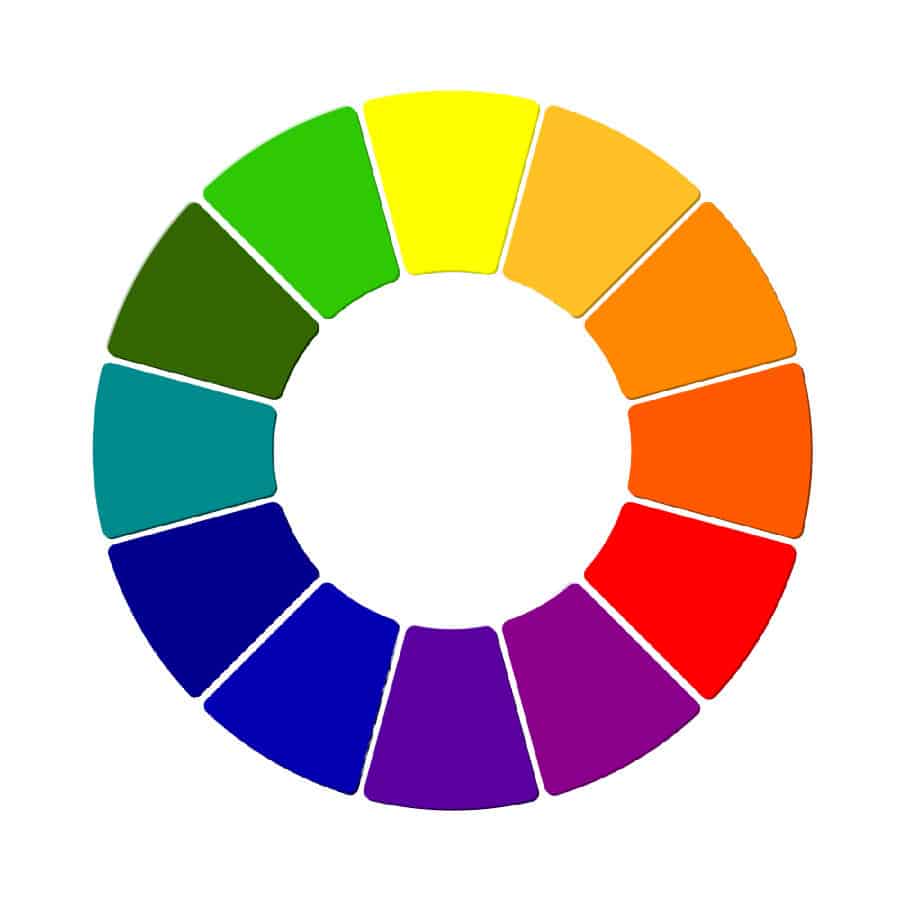
A color wheel consists of primary, secondary, and tertiary colors that can be blended together to create a wide range of hues. By learning basic color theory, you can develop your skills in creating beautiful art pieces.
If you want to know more about color theory, read my post about the basics of color theory to get a better understanding of how colors are achieved.
This post may contain affiliate links. If you click a link and buy, I may receive a small commission. Please see my full privacy policy for details.

Why You Should Learn to Mix Paint
While there are a lot of tubes of red paint you could buy, artists’ paint is expensive. You could have 15 different reds in your art supply and still not have the right colour for your painting.
I have a family of redheads, and each one of them has a slightly different shade. Learning to mix your own shade of red will save you money and give you more control over the colours in your work.
This article will focus on mixing different shades of red from colours you probably already have in your paint box. Start with a common red colour, such as Cadmium red or alizarin crimson, and mix your new colours using the mixes below.
I primarily use acrylic paint, but these paint mixes should work for oil paint or watercolour.
Dark Shades of Red Paint
It is tempting to just add black to the red paint to make a dark red. However, adding black paint can leave you with a dull, almost muddy red. Black can also easily overpower your red colours, so if you use black, start with a very tiny amount and build up from there.
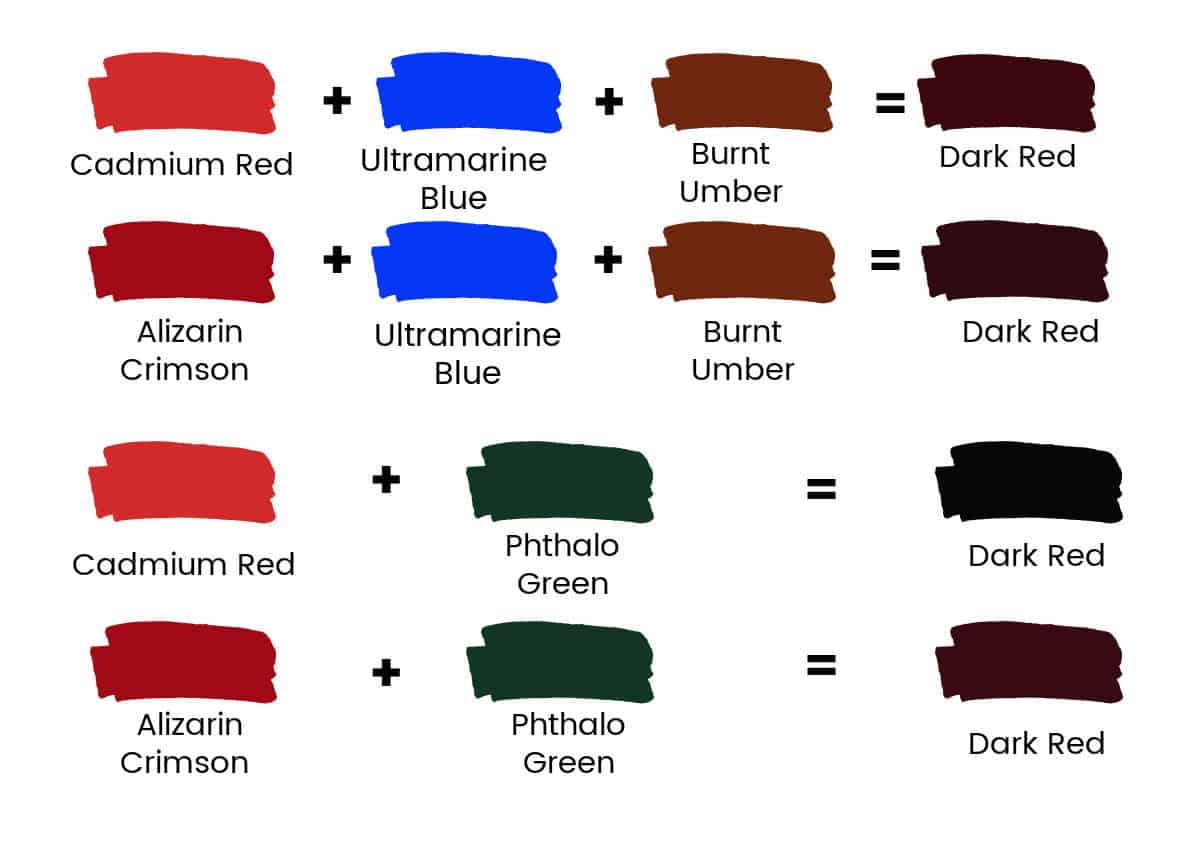
To mix a dark red without black, start with one of the basic red colours and add a little dark blue, such as ultramarine, mixed with a little burnt umber.
I know you are thinking “red and blue make purple,” and that is true, but if you mix a small amount of blue into the red along with the burnt umber, which is a reddish-brown, you should be able to avoid getting a full-blown purple, and instead, you will create a dark red.
You can also achieve a dark red by mixing in a little Phthalo Green. This will give you a slightly earthier dark red.
Light Red
You can get a lighter red by adding white paint, but the problem here is that adding white often leads to a pink colour. A tiny bit of white can lighten the red, but as shown in the picture below, the more white you add, the pinker the colour gets.
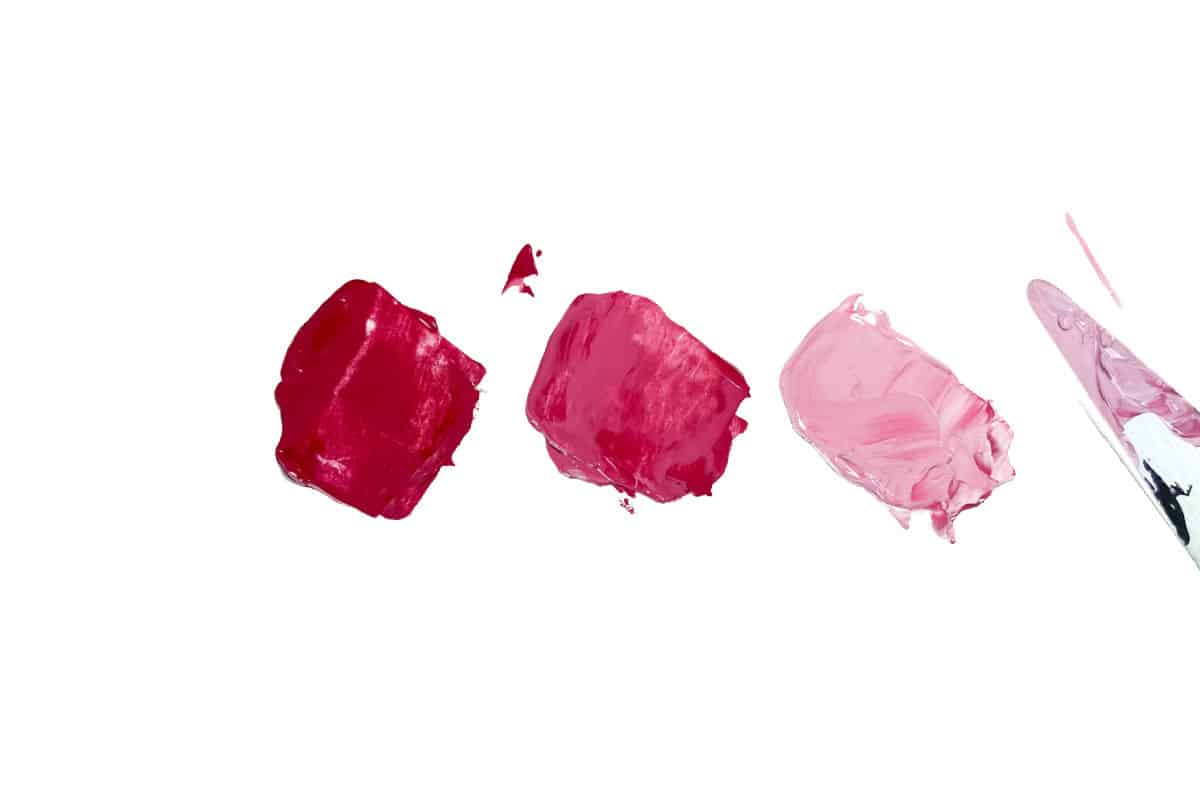
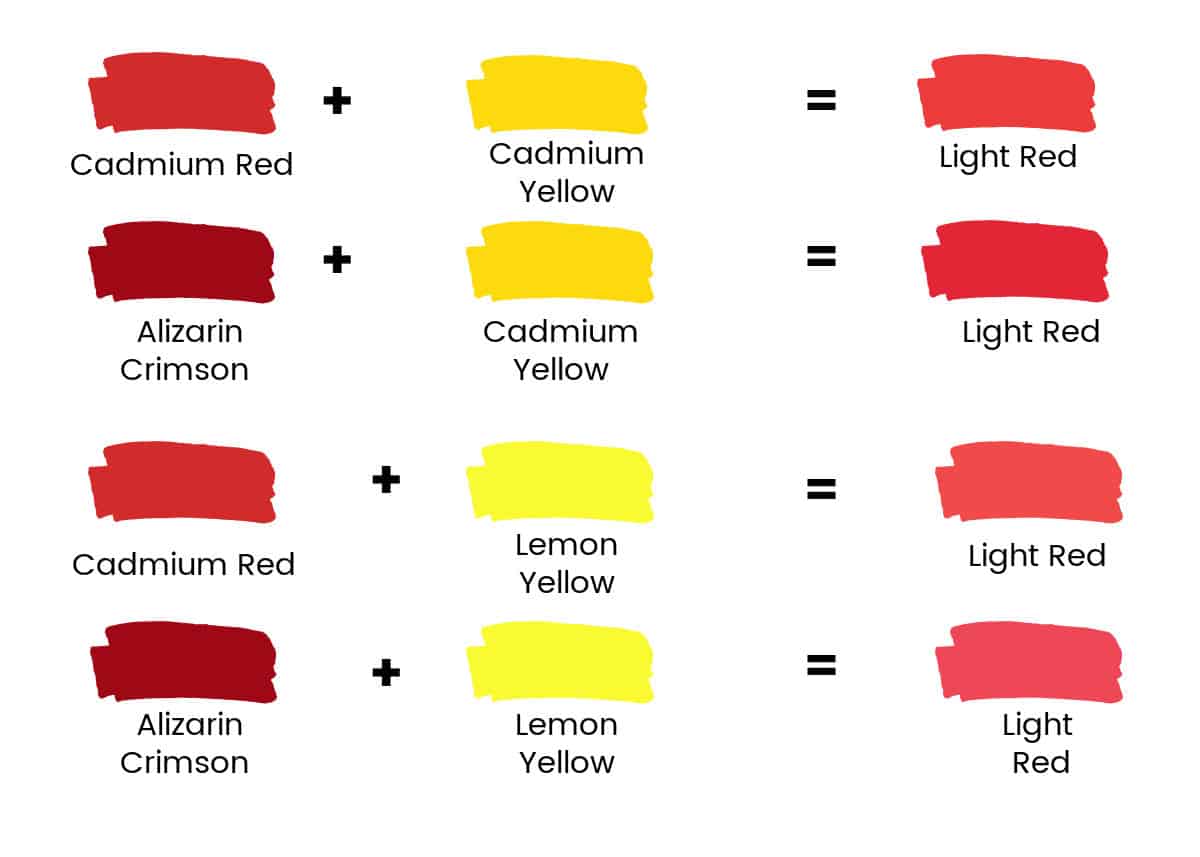
A better option would be to add a little yellow, such as Cadmium yellow or lemon yellow. Adding one of these yellows will result in a light colour without giving you pink.
Warm Shades of Red
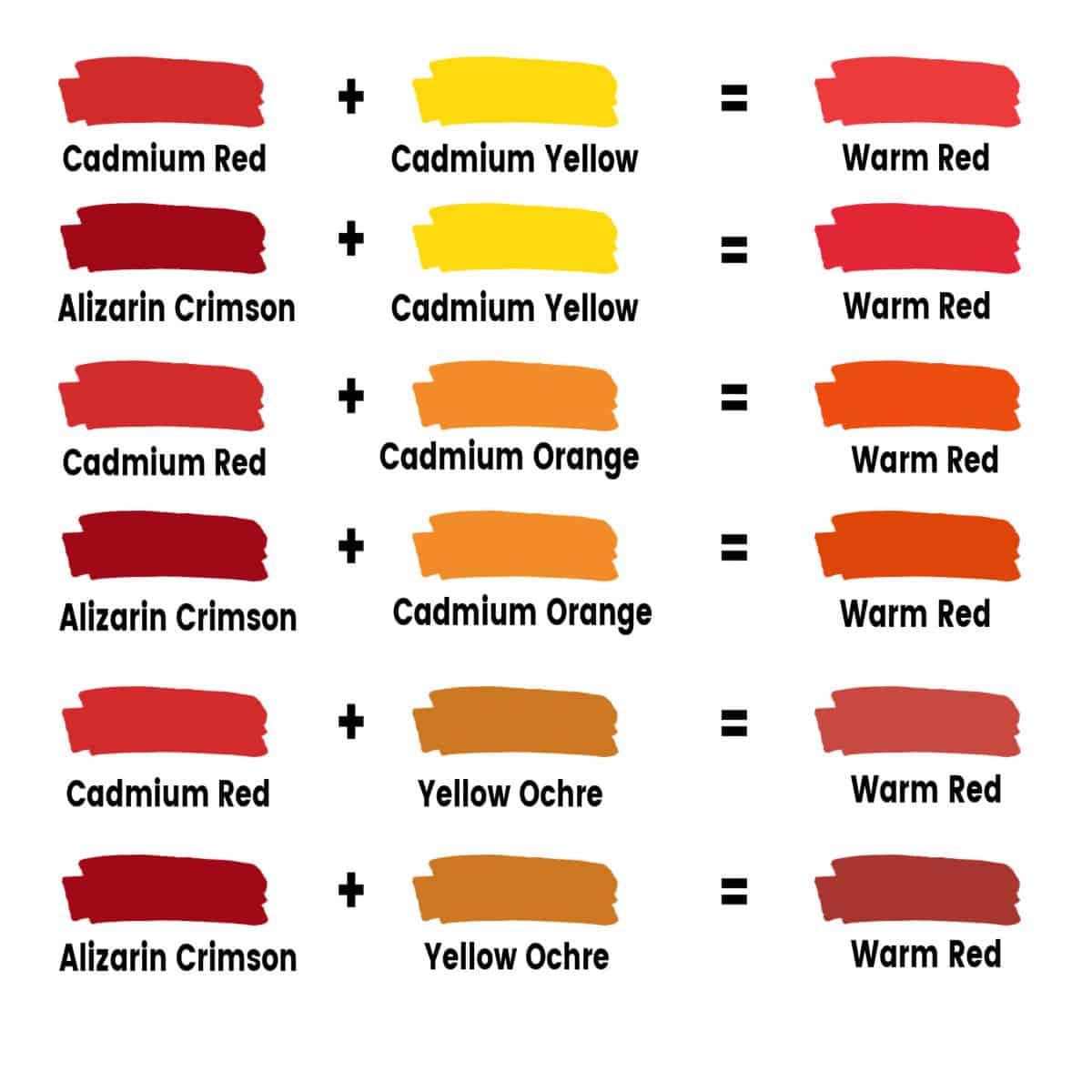
Warm reds can be mixed by adding warm colours such as cadmium orange, or warm yellows such as cadmium yellow, or yellow ochre to a base red. The cadmium orange and cadmium yellow will give you a warm, vibrant red, while the yellow ochre will give you a more earthy, warm red.
Cool Red
In terms of colour temperature, red is considered a warm colour. However, you can achieve cool reds depending on how you mix your colours.
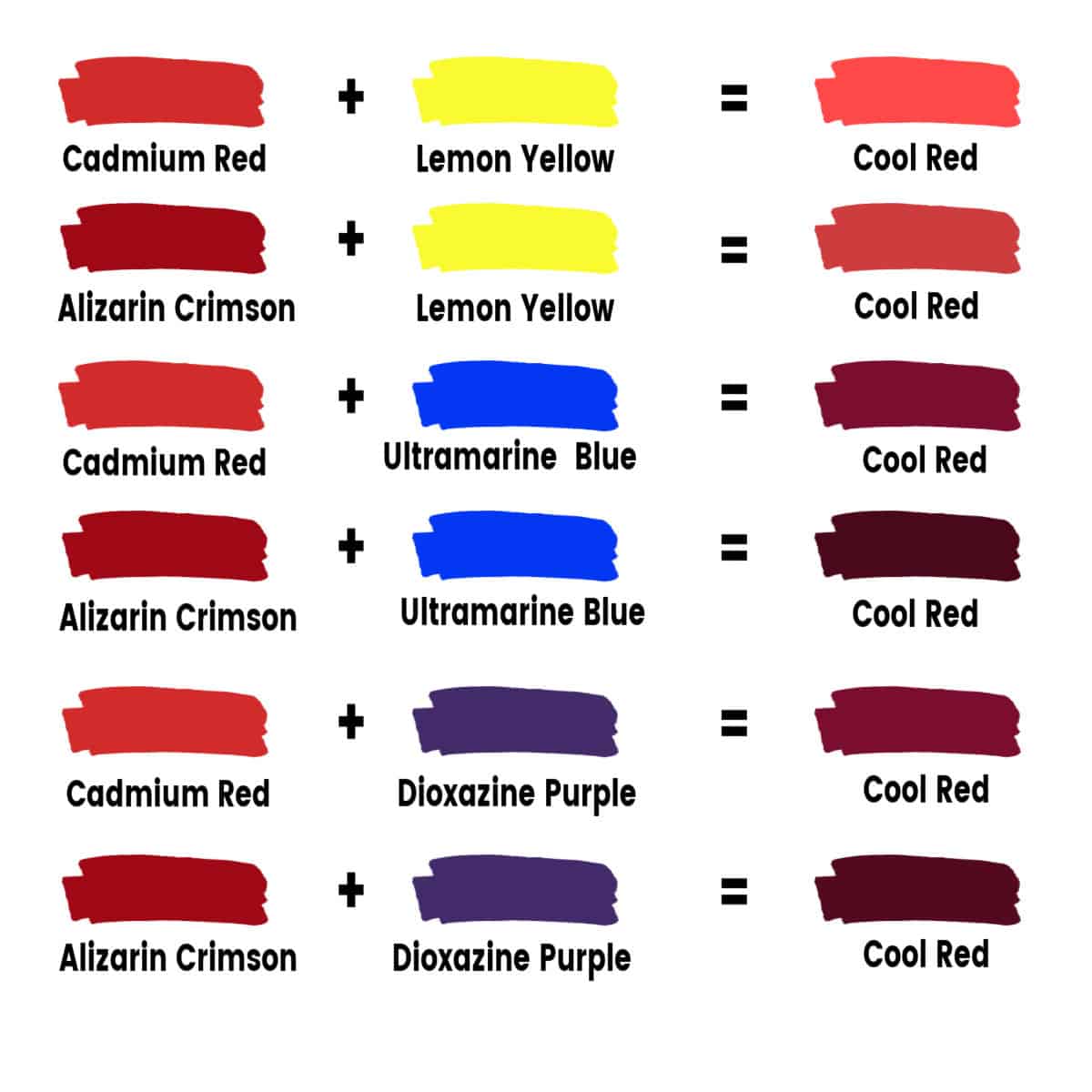
To get a cool red, you can add a cool yellow, such as Lemon Yellow, to get a light cool red.
Adding a cool blue like Ultramarine Blue or Dioxazine Purple to your base red will also give you a cool red. Both Ultramarine and Dioxazine are dark pigments, so they will give you a dark colour.
Add very little to your red to begin with, since you can easily end up with a purple colour if you add too much.
Muted Shades of Red Paint
When you want to mix a muted red, you need to add a little of the complement of red.
A complementary colour is the opposite colour on the colour wheel. Complementary colours tone down or mute each other.
To find out more about complementary colours, read my post on complementary colours.
The complement of red is green. So to tone down or mute your base red, just add a little green, such as Phthalo Green or Hookers Green.
Add as much or as little as you need to achieve the desired effect, but be careful: red and green mixed 1:1 will give you brown. Start off with a little and work from there.
These reds become almost brownish or rust-coloured.
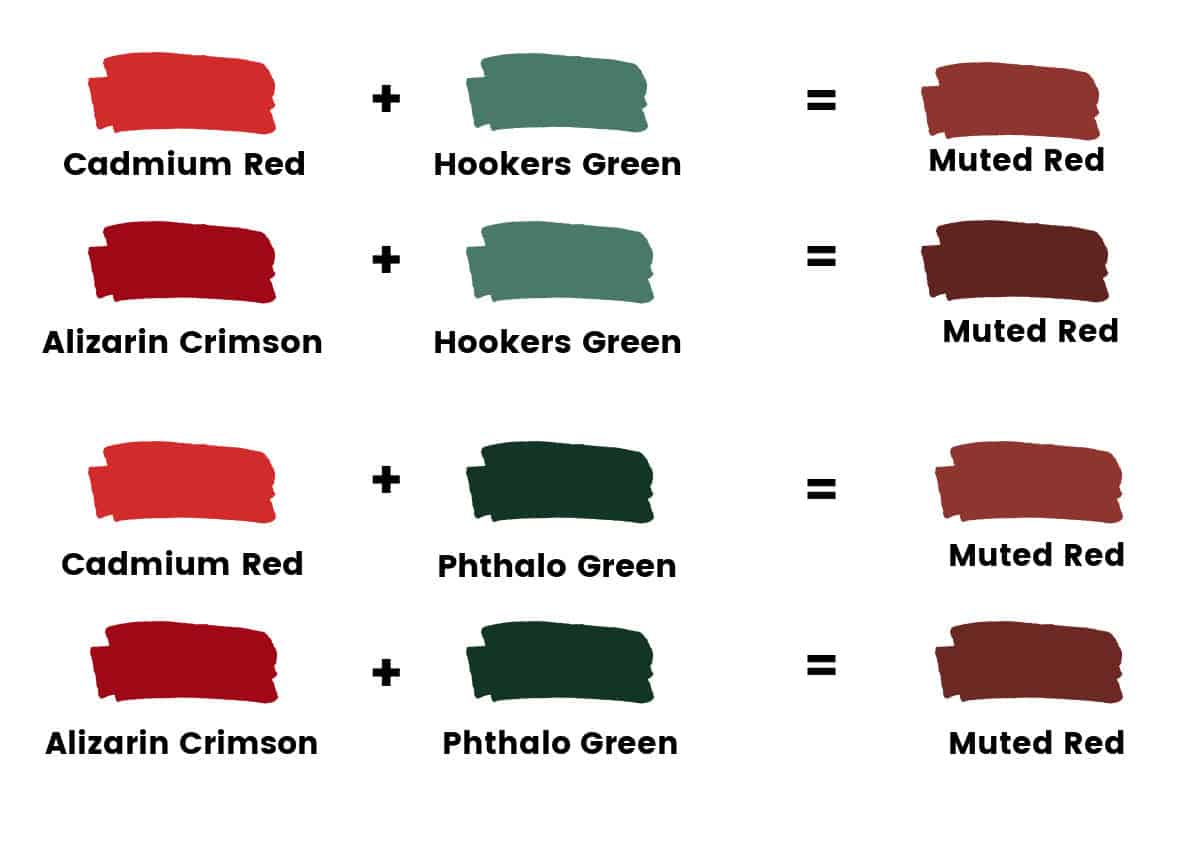
You can experiment with whatever reds you have available to you and add blues, yellows, or greens to see what colours you can come up with.
It is very hard to see the exact colour on your computer or phone screen. The colours will be distorted depending on your screen display.
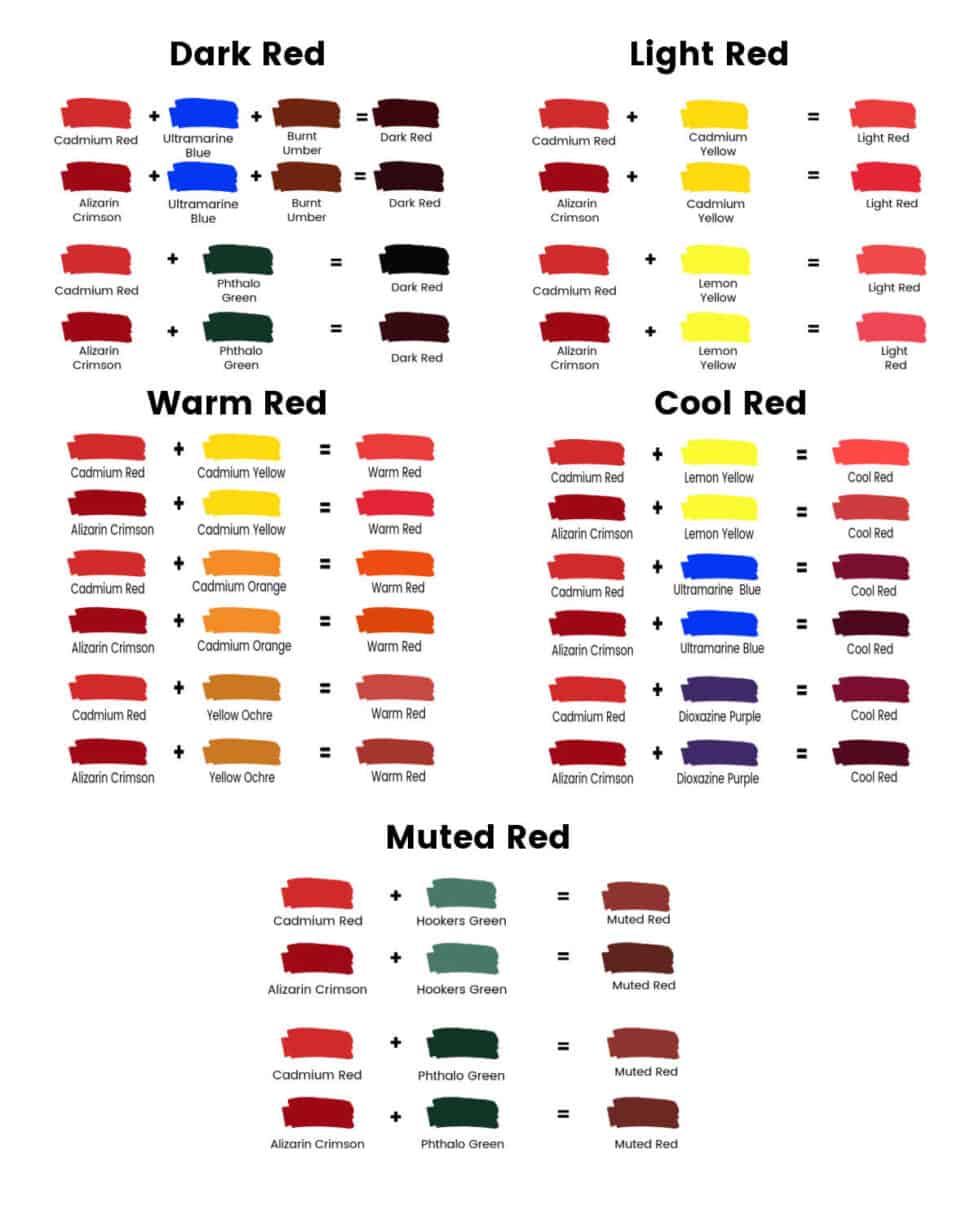
I have included a printable colour chart below that you can use as a basic guide.
The best way to be sure you are getting the colour you want is to make a swatch card with your own paints and note down what colours you use. That way, you will have a reference to guide you whenever you need to mix a red colour.
Red Colour Mixing Chart
Notes:
Always mix your paint well and test it on your palette before applying it to your artwork.
Remember, the amount of paint you use, as well as the ratio of each colour, can significantly affect the final shade of red you create. Start with small amounts of paint and experiment until you achieve the desired result.
If you have questions, you can leave them in the comments below. You can also join our free Facebook group, Trembeling Art Creative Corner, where you can ask questions, post your work and get to know some fantastic artists from all genres and skill levels. 😊
Love your paint mixing guides! Thank you for taking time to do this – so clear and easy to use. Especially love that I can easily pin for reference,
Thank you so much for the information you provide. Your explanations are the easiest to understand that I have found. I will be using your blog as a reference often. 🙂
Thank you so much! I am glad the articles are helpful. 😊
Hello Marilyn. Thanks so much for sharing. I am a beginner and is so nervous about paint mixing. I want to paint a protea with water paint. I will start off with red then the leaves in green. Need some of your advise or help. Thanking you in advance
Awesome! Thank you sharing I love your emails they are full of all kinds of tips an tricks
Have Beautiful Day!