To mix a basic brown, you need to combine two complementary colours (opposite each other on the colour wheel), such as blue and orange or yellow and purple.
That’s pretty basic, but there is a whole lot more to mixing colours and many ways to get the brown colour you want for your painting. Keep reading to learn about warm browns, cool browns, light browns, and dark browns and how to adjust the values to get the perfect colour.
To those who like to paint in bright, vibrant colours, brown can seem slightly boring. It can bring to mind sensible shoes and wool suits.
Brown tones are present in everything from hair colour to skin colour, to landscapes, and even our morning coffee and secret chocolate snacks during the day.
These are fairly common items, but you may not have thought of brown hues in other things, such as the stamen in the center of a flower or the colour of the sand on your beach scene.
Knowing how to mix the perfect shade of brown will help you achieve a more realistic look or get the perfect tone in your abstract piece.
I have included a colour chart with the most popular mixes at the end of this post. You can download and print it for future reference.
These are just a few mixes. There are so many different colours of brown you can mix that I could fill pages with charts.
The following article will provide some helpful tips for choosing what colours to use to make brown acrylic paint, and then give you an example of how these different combinations will look on paper or canvas.
This post may contain affiliate links. If you click a link and buy, I may receive a small commission. Please see my full privacy policy for details.
Using Colour Theory to Mix Brown Paint
In order to properly mix paint colours, you will need to know a little about colour theory. It’s boring, I know, but here’s why it’s necessary.
The simple answer for mixing brown is to combine yellow, red, and blue in equal amounts. But then you would have a dull, muddy colour, and all of your trees would be the same shade with no variations in value.
Hair and skin tones would be flat, and you probably wouldn’t have the right colour for that old sea chest you want to paint or the lovely mahogany table in your still-life painting.
Using colours that are very similar to each other can create an unappealing artwork because the viewer’s eye won’t be able to distinguish where one shade begins and another ends.
Knowing how to mix all those subtle hues of colour will give you an endless palette of colours to use in your painting. I will give you the basics of colour theory so you can get on with mixing your perfect brown.
If you want to go further in-depth with these topics, I have articles on Colour Theory, Complementary Colours, and Warm and Cool Colours that you can check out.
So, let’s get started with learning a bit about colour theory and the colour wheel.

Primary Colors
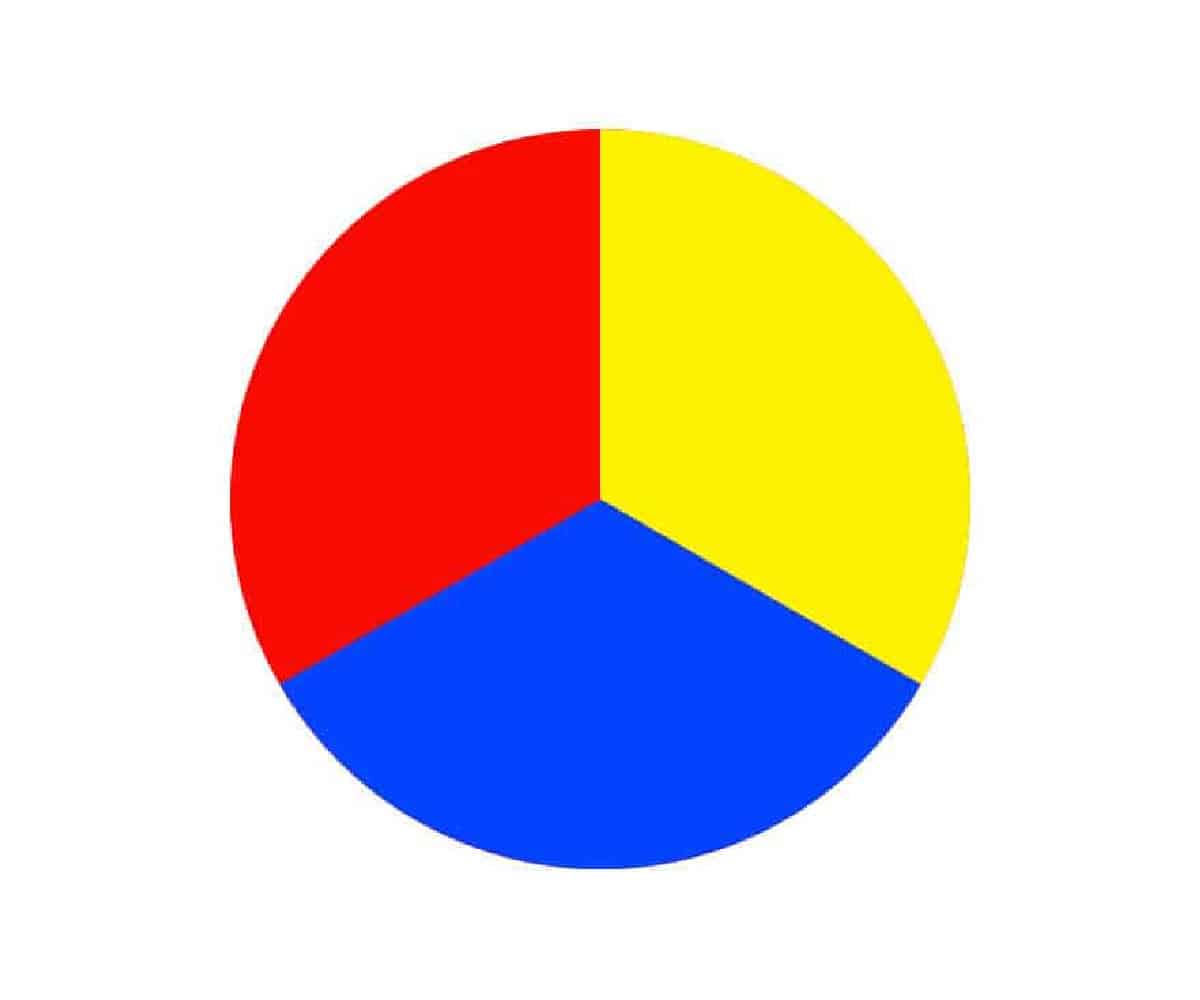
The primary colours are red, blue, and yellow. These are the basic colours of the colour wheel. You cannot use other colours to mix these, which is why they are called primary colours.
You can, however, use these three colours to mix just about every other colour, including brown.
If you mix all three primary colours together in equal amounts, you get brown, but it is an ugly brown that I like to call “after the rain mud.”
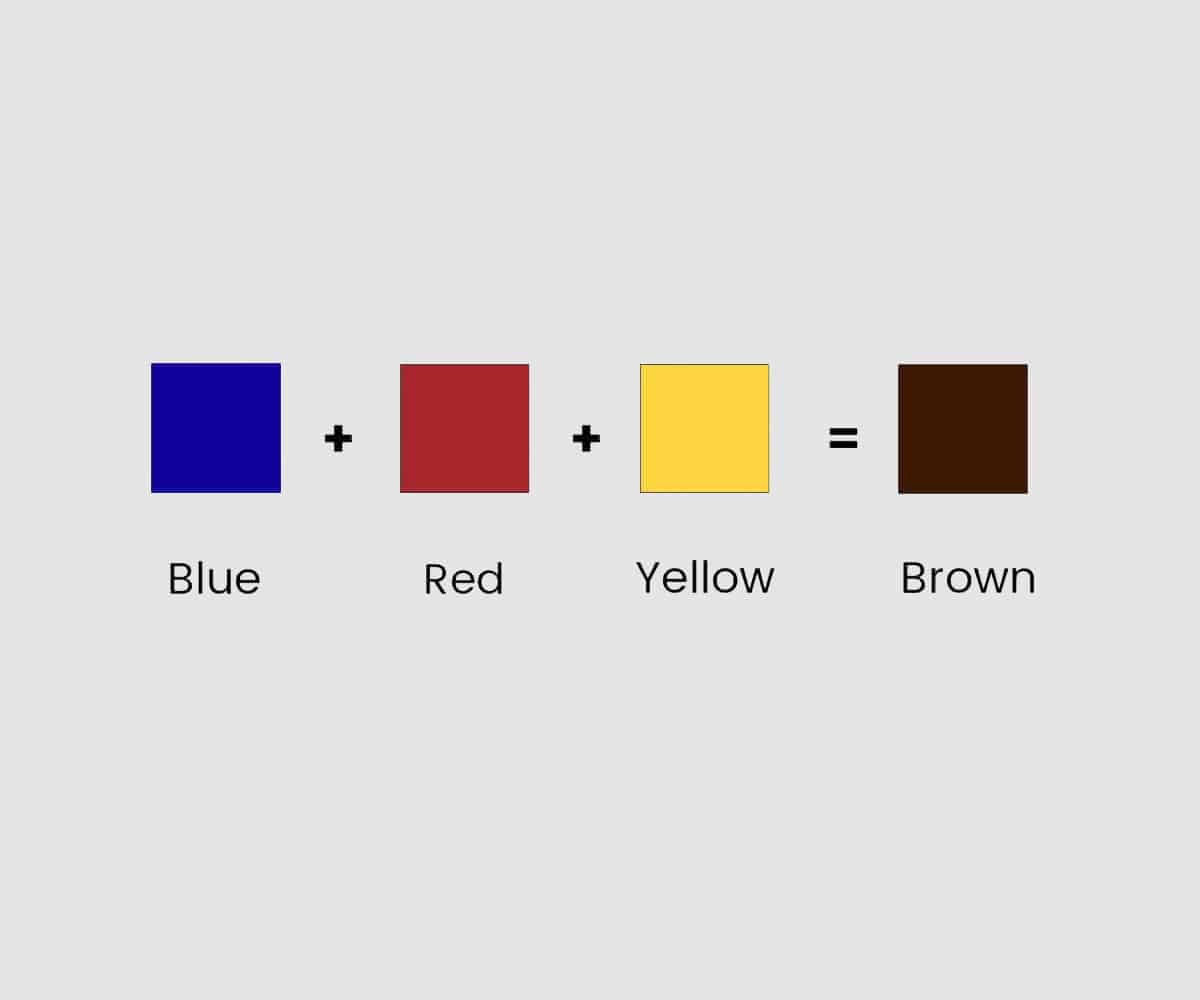
You need to mix some secondary colours to get more pleasing colours and interesting tones and shades.
Secondary Colors
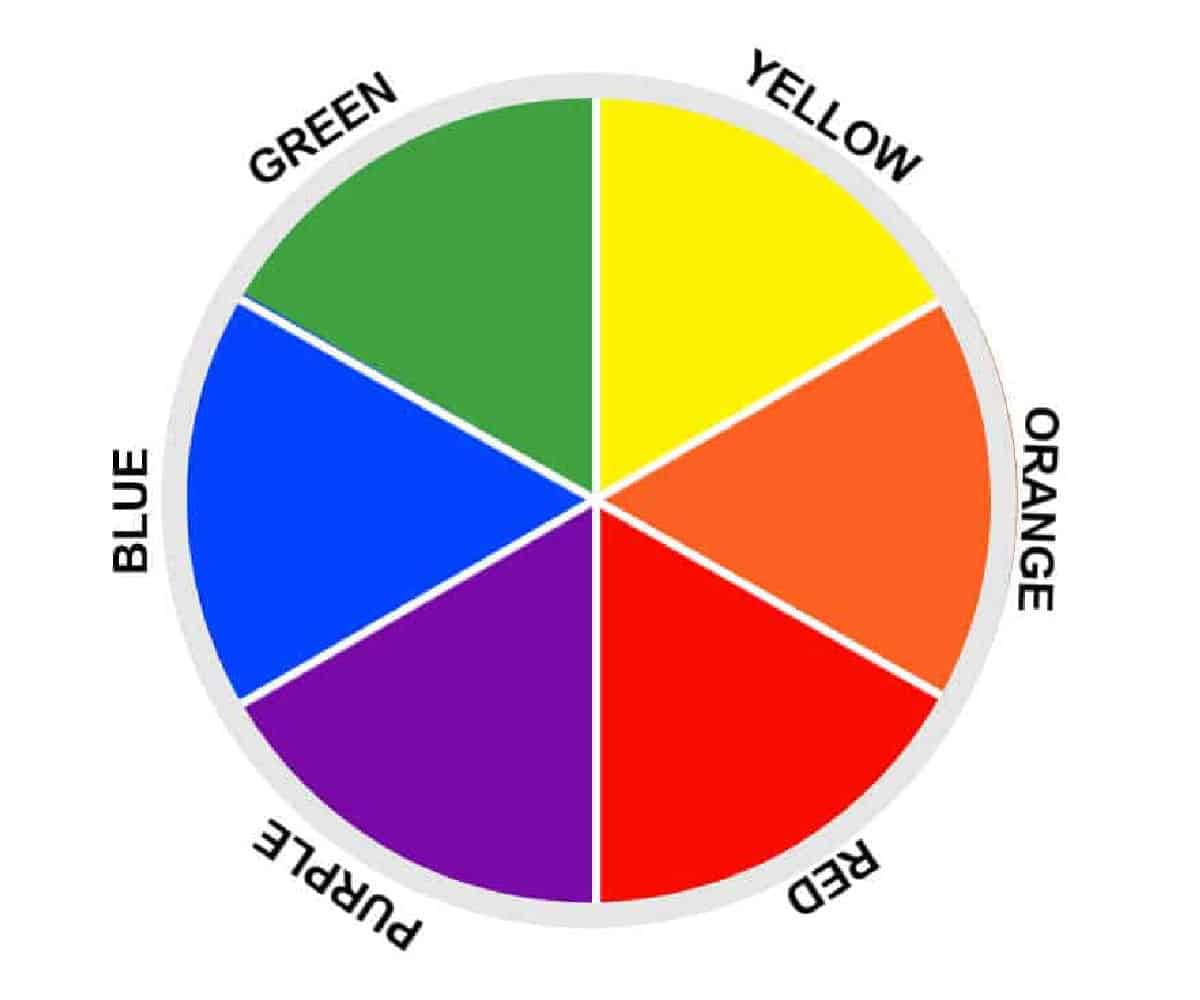
These are colour combinations created by an equal mixture of two primary colours. As you can see on the colour wheel, secondary colours are located between the primary colours.
The secondary colours are orange, purple, and green, which are achieved using the following mixes.
Yellow + Red = Orange
Red + Blue = Purple
Blue + Yellow = Green
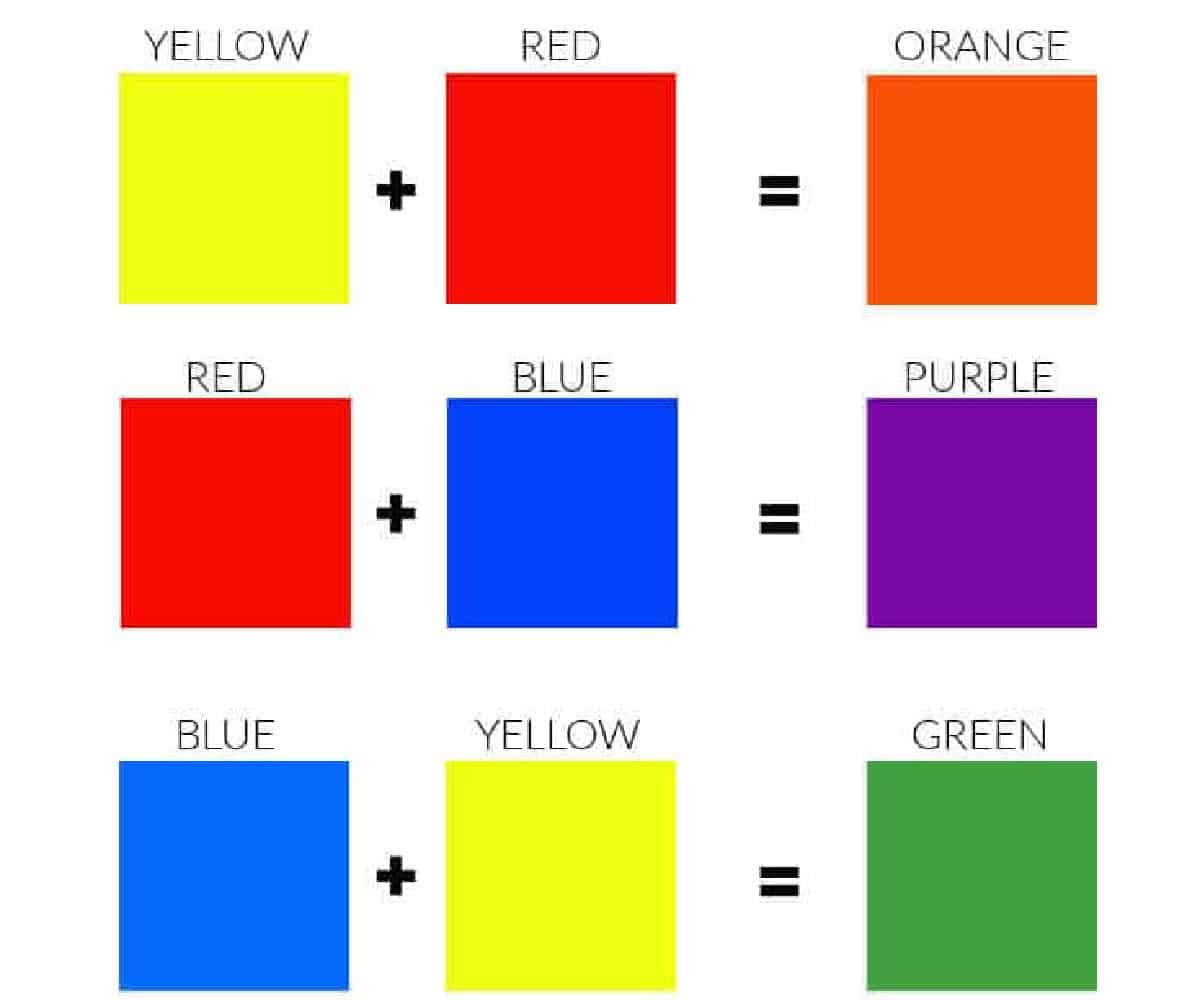
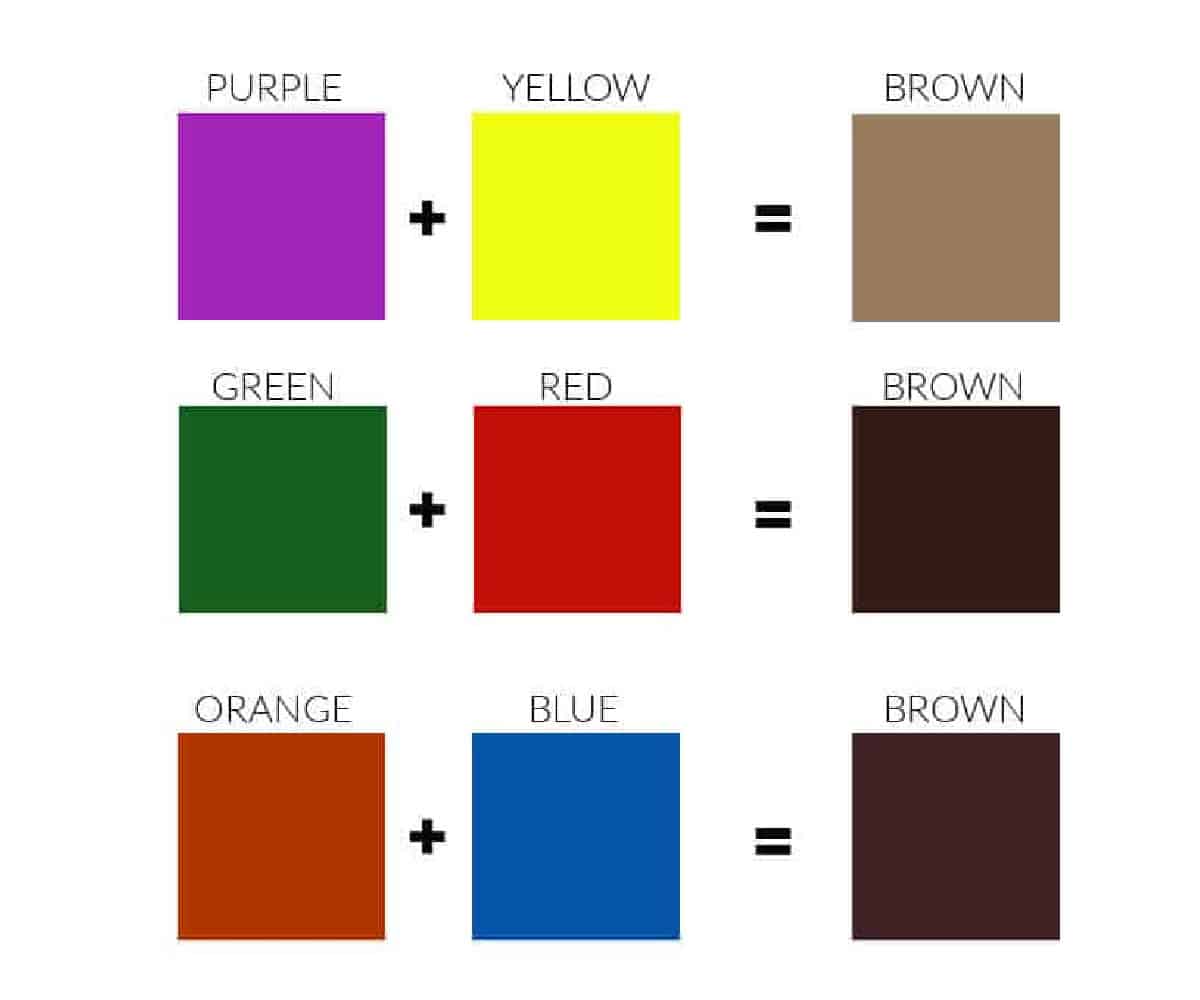
Mixing one of these secondary colours with a primary colour will give you brown. Why?
Because by mixing a secondary colour with a primary colour, you are basically mixing all three primary colours, just not in equal amounts. This will give various shades of brown.
By adding a little more of one colour, you can adjust the hue to your liking. You can also use a premixed purple, green, or orange tube if that gives you the colour you are going for.
Purple + Yellow
Green + Red
Orange + Blue
Complementary Colors

Complementary colours are colours that are opposite each other on the colour wheel. So, for example, the complement of blue is orange, the complement of yellow is purple, and the complement of red is green.
Complementary colours reduce the intensity of each other. So, adding a tiny bit of orange to the blue will dull the blue slightly. Adding a lot of orange to blue will give you a deep brown.
Color Temperature
Colours have a temperature. Blue is generally thought of as a cool colour, while red and yellow are warm colours.
You can have warm and cool variations within each of these colour families.
Some blue colours can be considered warm, and reds and yellows can be considered cool.
Warm colours make things look closer to the viewer, and cool colours give the illusion of being further away.
To understand warm and cool colours better, read my post on Warm and Cool Colours. For now, we are going to talk about how colour temperature can affect the final result of your brown mix.
Mixing Warm Browns
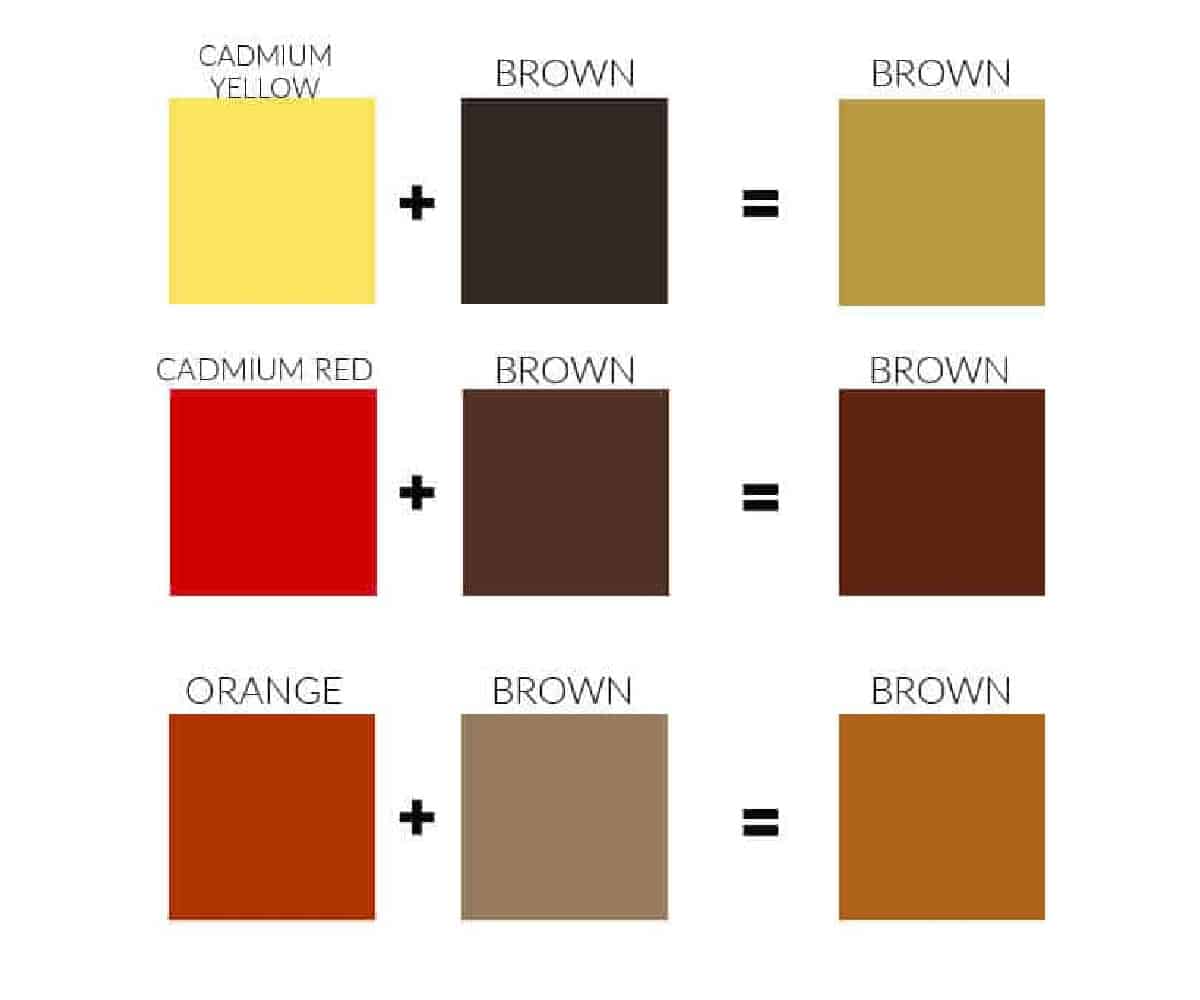
You want to mix a warm colour if you paint tree trunks in sunlight or a weather-worn board on an old barn.
To do this, add a little bit of yellow, such as Cadmium Yellow or red, such as Cadmium Red, or even a touch of orange to your brown mix.
Red would give you a reddish brown, while yellow would give you a golden or even beige brown. Add the colours a little at a time until you get the colour you want.
If you go too far and your brown is too warm, you can add a touch of blue to cool it down.
Mixing Cool Browns
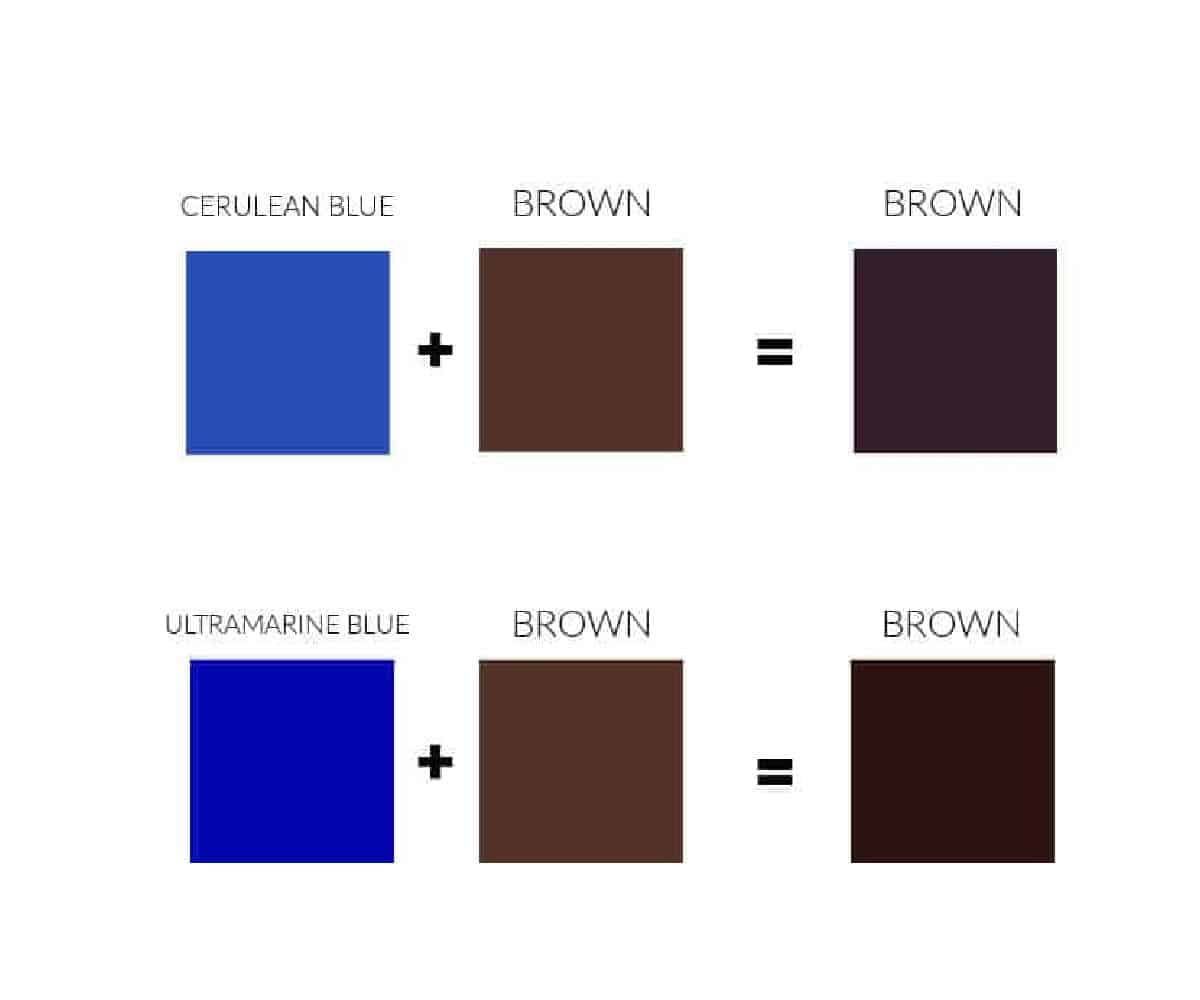
To paint tree trunks in winter or cool tones in fur, you must mix a cool brown. Adding a little blue to your brown mix will give you a cool brown. Try Cerulean Blue or Ultramarine Blue.
Again, add a little at a time until you get the colour you want. If it becomes too cool, add some red or yellow to bring it back.
Color Value

Colour value refers to how light or dark a colour is. Values can range from black to white on a value scale. To get a more in-depth look at value, see my post on Value.
While adding white or black to your brown mix can make it lighter or darker, there are sometimes disadvantages to using these to alter the value of your brown. Here are some other ways you can lighten or darken your brown mix.
Mixing Light Brown Paint
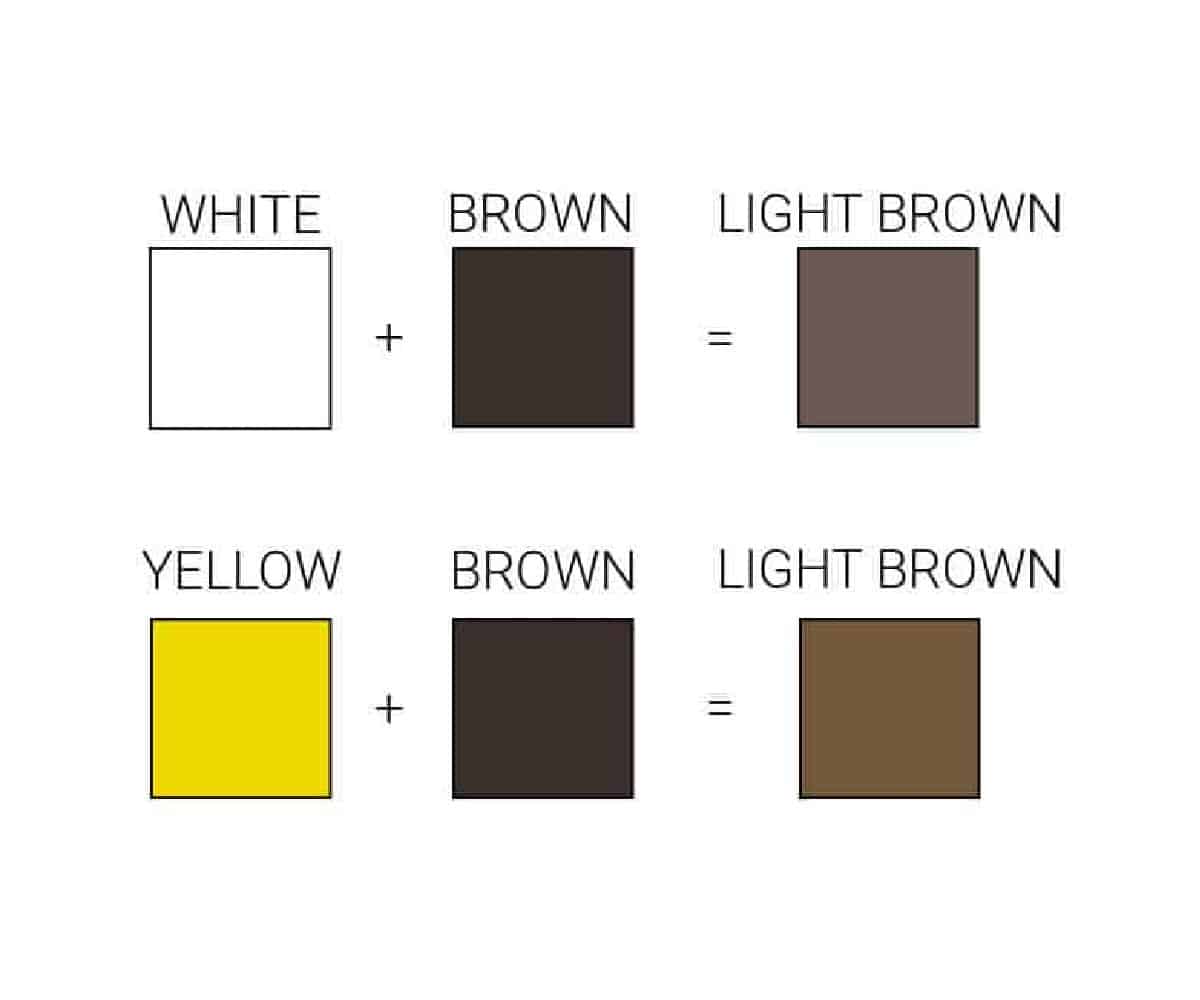
Adding white paint to brown will give you a light brown, but it can sometimes have unexpected effects. If your mix is already heavy on the red side, say a reddish brown, then adding white will give your brown a pinkish tint.
If that’s not what you are going for, you might try adding yellow paint to your mix. Add the yellow in little bits at a time until you get your desired colour.
If you add too much yellow, you can mix a little more red back into your mix to darken it again. The key is to add colours in tiny amounts.
Mixing Dark Brown Paint
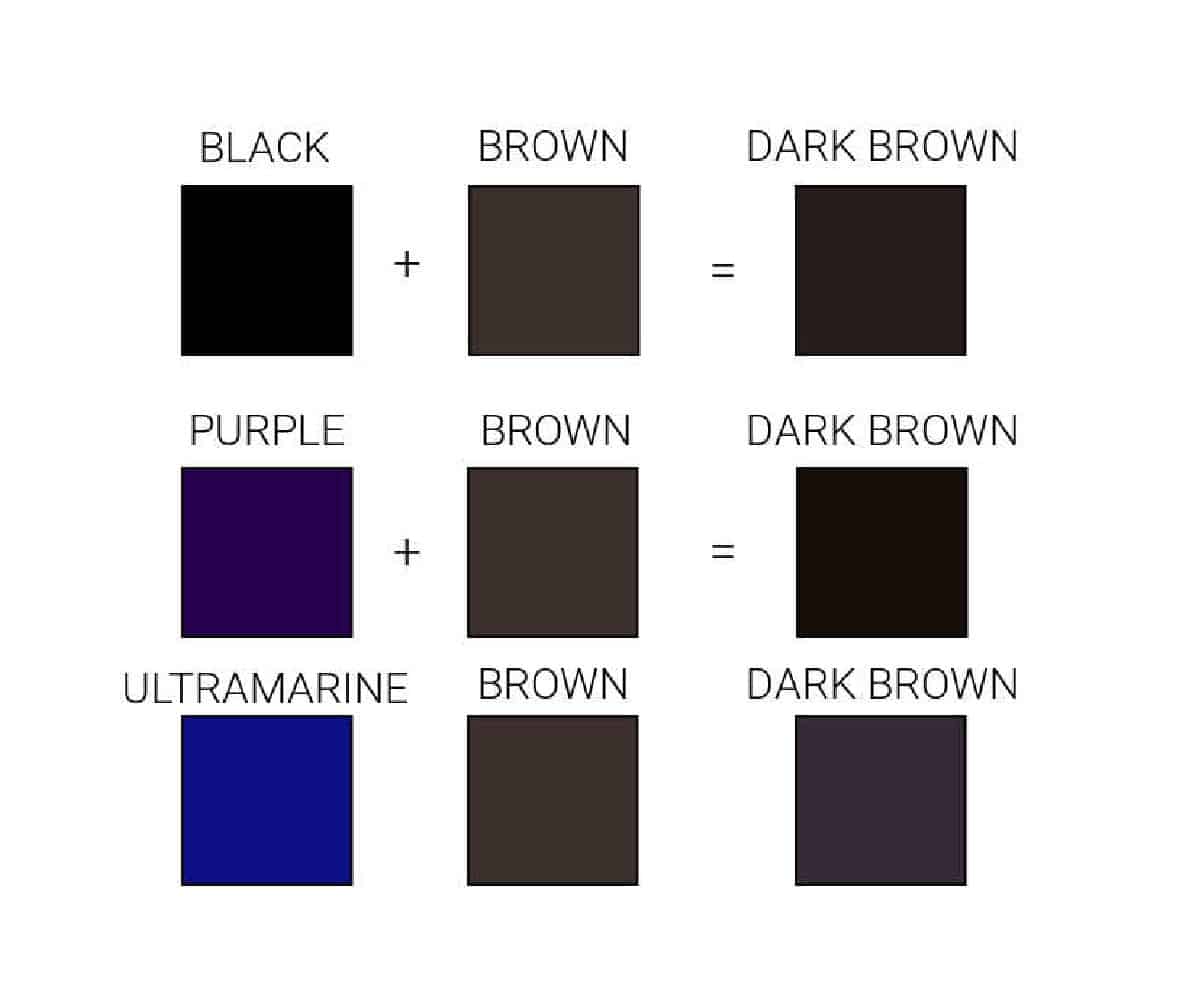
While black paint can give you a darker shade, it is very intense and can easily overpower other colours.
Most premixed tubes of black paint also contain some blue, which can give your brown paint a greenish shade if you have used a lot of yellow in the mix.
Black will also slightly tone down your brown mix, which is not bad, but it may not be the effect you want.
To make your brown darker, you can add various other colours, including Dioxazine Purple, Pthalo Green, or Ultramarine Blue. You will get a different shade of brown from each of these, as shown below.
To get the darkest shade of brown possible, try mixing Pthalo Green with Alizarin Crimson ( this combination produces a chromatic black) and adding a little at a time to your brown mix.
Go slowly with this because you can easily go too far and end up with a black instead of the dark brown you want.
Premixed Tubes of Brown Paint
You can also use these techniques to alter the colour of your premixed brown paint.
Adding a little white or yellow paint to Burnt Umber, which is a lovely dark brown colour, will give you a lighter shade of brown.
You can also add a blue or purple colour to your browns to get a darker shade. Play around with what you have to see the different results you can get. There are so many different shades of brown that can be created.
Tips for Mixing Paints
- Make sure you have a clean palette. Then, place your paint along one side to easily grab some of the colour you want.
- Use a palette knife to grab a little of each colour and place them close together on a clean area of your palette. Wipe your knife clean between each colour so you don’t contaminate your other blobs of paint.
- You’ll get brown when you mix yellow+black (like for painting skin tones), red+grey, or blue+brown. If you want deeper browns, try adding a little ultramarine blue to the mixture.
- Mix the colours together, adding more paint to get the tint or shade you want.
- Make sure the paint is thoroughly mixed. You don’t want to be surprised by a bright streak of red or yellow when you apply the paint to your canvas (or maybe you do 😉). This is especially important if you use a brush to mix your colours rather than a palette knife.
- The nice thing about acrylic paint is that if you don’t like the colour you mixed once you apply it to your canvas, you can always adjust your mix and paint over it.
- If you are mixing a large amount of paint, scrape some off your palette and put it in a jar with a tight lid. This will keep it from drying out. Alternatively, periodically mist your paint with water to keep it workable.

Take Notes and Swatches of Your Colour Mixes
In order to make sure that your colour mixes are consistent, you should take notes and samples of them. This will make mixing these same colours easier in the future.
A sheet of heavy paper or watercolour paper is perfect for painting a small swatch of your mix and writing down which colours you used to mix it.
You could also write down which project you used the mix in so you can refer to it and see how it looked on the canvas.
Note: Pigment strength varies by paint manufacturer, so you may get slightly different tints or shades depending on which type of paint you use. That is why making detailed notes and swatches can come in handy for future paintings.
Colour Chart of Brown Mixes
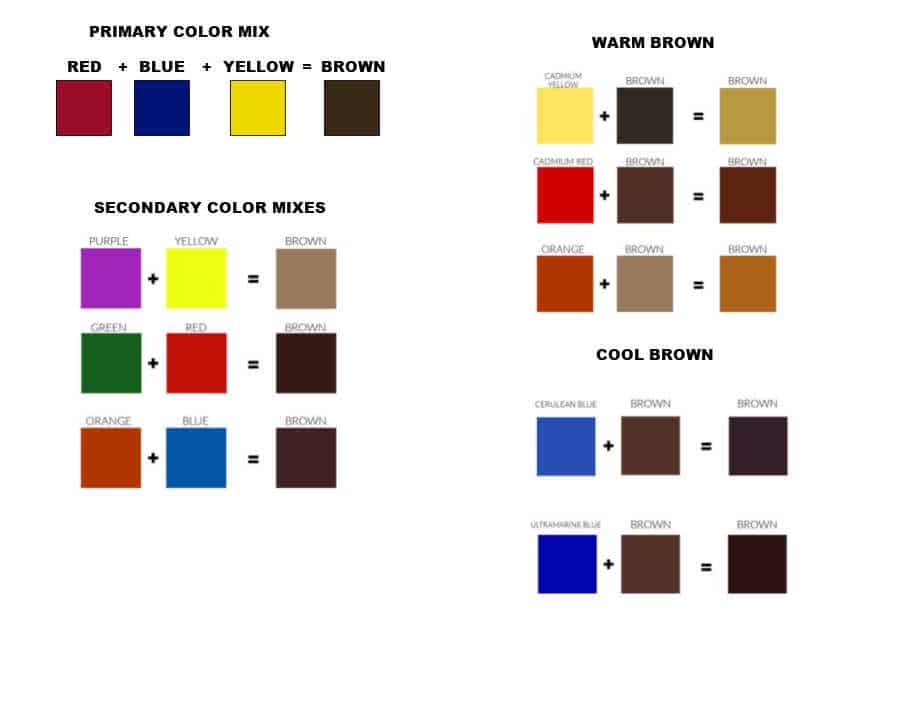
For most artists, understanding the colour wheel and how colours can be mixed together is important. I have given you a few tips for mixing brown paint with other colours to make your paintings more vibrant and realistic.
If you want to learn even more about this topic or chat about any other art-related questions, join my Facebook group, Trembeling Art Creative Corner! You’ll find new friends who love talking about painting just as much as you do.
I hope these helpful hints will inspire you to create beautiful artwork of your own. Happy creating!

thank you so much for the such information which is so valuable for me
Thanks for sharing!
Thank you so much for the info on browns, it is timely for myself. I was about to give up on painting, decided to give it one more try and found myself happier with the result. Thank you for all your notes to us who follow you, it feels as if you are talking to me personally, another talent of yours. Stay well and thank you.
Madie
Hi Madie; I am glad you are continuing to paint.The more you paint, the more you will be happy with the results. I am glad my information and notes are helpful. Thank you for reading. Happy painting! 😊
Fantastic, terrific information. Thank you. Marie
Thank you so much for this mixing information. I will use.
Really enjoyed your topic of mixing brown paints . Very informative