
Fall is one of the favorite seasons for landscape painters. It is also a great season to get inspiration for abstract painting as well. The bright colors of fall foliage stimulate the creative mind.
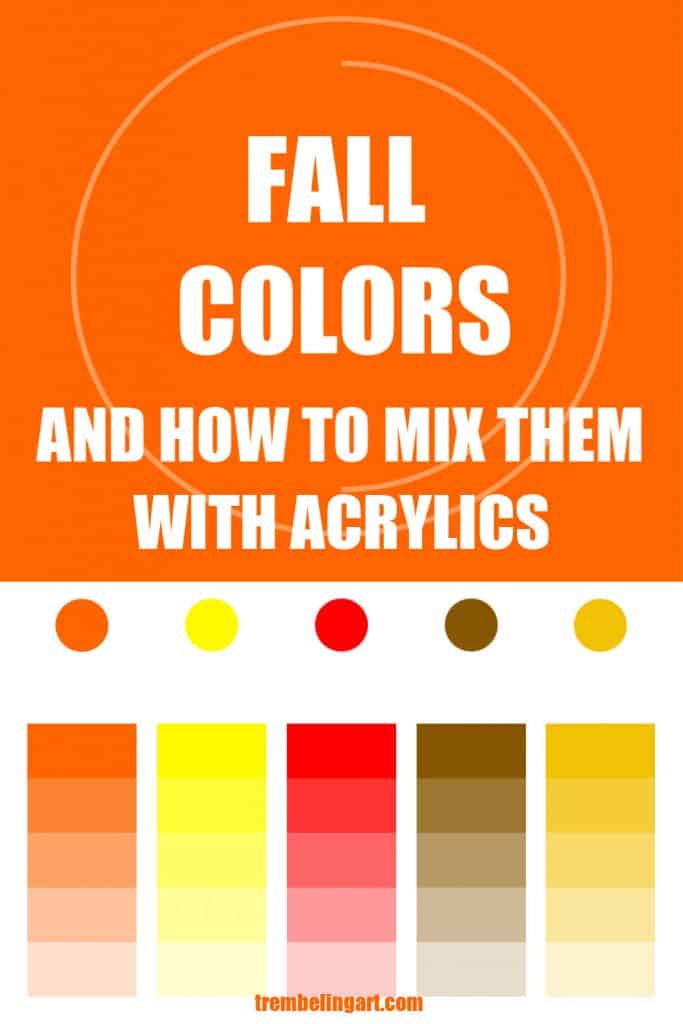
There are so many reds, yellows, oranges, and browns that just using premixed colors from a tube won’t give you the colors and depth you want. In this article, I discuss how to mix various fall landscape colors.
**This page may contain affiliate links to products I have used or recommend. If you purchase something from this page, I may receive a small percentage of the sale at no extra cost to you. For more information click here.**

Mixing Fall Oranges
Orange is the first color many people think about when you say fall or autumn.
There are so many hues of orange, from bright, vivid yellow/orange to dull brown/ orange.
All of these colors can be seen in the gradually changing landscape of autumn.
Mixing a yellow and a red will get you an orange, but be careful which hues you use. If the red or yellow contains any blue, you will end up with a dull color.
Why? Because the complement of orange is blue… they are opposites on the color wheel.
So, a red with a blue undertone mixed with a yellow will not give you a vivid orange but rather a dull or burnt orange.
For more info on complementary colors, check out my posts on color theory below.
Color Theory for Absolute Beginners
Warm and Cool Colors and How to Tell the Difference
Understanding Complementary Colors for Beginners
You need warm yellow and warm red to get a bright, vivid orange.
Warm colors tend not to have blue in them but rather various amounts of red undertones, so they are already closer to orange on the color wheel.
A color wheel is an important tool for artists. Being able to reference the color wheel and seeing where the color bias makes mixing your own colors so much easier.

To make an orange more vivid, add more yellow.
If you are using a tube of orange, for example, cadmium orange, you can add a little cadmium yellow to make it even more vivid (although cadmium orange is already pretty vivid!).
If you are mixing your own orange for a fall landscape and are not happy with the brightness of the color, try adding a little yellow until you get the brightness you want.
Add small amounts of red to your orange to make a darker orange for mid-tones and shadows. Red will make the orange darker and deeper.
You can try adding a very tiny amount of purple to get a darker, more greyed orange for your shadows. Start off with a tiny dot since purple can quickly turn your orange to mud!
Try experimenting with the different reds and yellows you have among your paint tubes. Do a color chart to see which color mixtures you would like to incorporate into your painting.
Colors are influenced by other colors around them, so painting an orange leaf next to the dull blue of a building will make the orange pop.
For a more in-depth look at mixing oranges, you can see my post on how to mix orange paint.
Mixing Fall Yellows
Fall is full of yellows and gold. Some bright yellows pop out of the scene of your fall landscape painting. Some muted yellow golds that highlight the reds, and a few bright greens.
Yellow ochre is a good yellow to use for gold. Adding a touch of white will lighten it, or a small dab of Cadmium Yellow will brighten the gold.
Cadmium Yellow Deep and Burnt Sienna give a dark, warm yellow.
You can experiment with tiny touches of red or blue to darken the yellow.
There are so many different shades of yellow in fall leaves that it is fun to experiment with mixing different colors to add to your palette.
Don’t forget to take notes on the different mixes you come up with so you can mix them again later or save them for as a reference for future fall landscape colors.
You can also learn to darken yellows by reading this post: How to Make Yellow Darker

Mixing Fall Reds
You can’t mix red since, like yellow, it is a primary color, but you can mix various shades of red.
There are many shades of red in an autumn scene, ranging from bright red to deep burgundy to rusty red.
You can mix various shades of red together to achieve the red you want. Adding a little yellow, such as Cadmium Yellow, will brighten your red.
If you want to lighten your red, don’t add white. The opaqueness of the white will give you a pink.
Instead, use Transparent Mixing White to lighten the red without changing the color.
To get a cool dark red, add a little Ultramarine Blue. To get a warmer reddish brown, add a little Burnt Umber.
Reds placed against their complement – green – will appear to “pop” or come forward more. So, a red leaf fallen on the green grass will stand out more than if it were mixed in with the other leaves on the trees.
For a more in-depth look at getting the right red color, read my post on mixing shades of red paint.

Mixing Fall Browns
We tend to think of brown as a dull color that has one hue. In reality, brown can have so much depth of color and look either rich and deep or dull and muted and is an important fall landscape color.
You can mix your own brown by adding blue to your orange mix or to Cadmium Orange. (remember mixing primary colors make brown…blue + yellow + red).
You can make it warmer by adding a little red or a little more muted by adding a touch of green.
Add small amounts of yellow, red, or blue to give you the shade you want.
A little white will lighten the brown to a beige and give it more opacity. A tiny touch of black will darken it.
Remember to use a light touch when adding more paint to the mix. Some colors, such as Ultramarine Blue or Cadmium Red, are very intense, so a little goes a long way.
For a more in-depth look at mixing brown color, see my post on How To Mix Shades of Brown.
Fall Color Palette for Landscapes
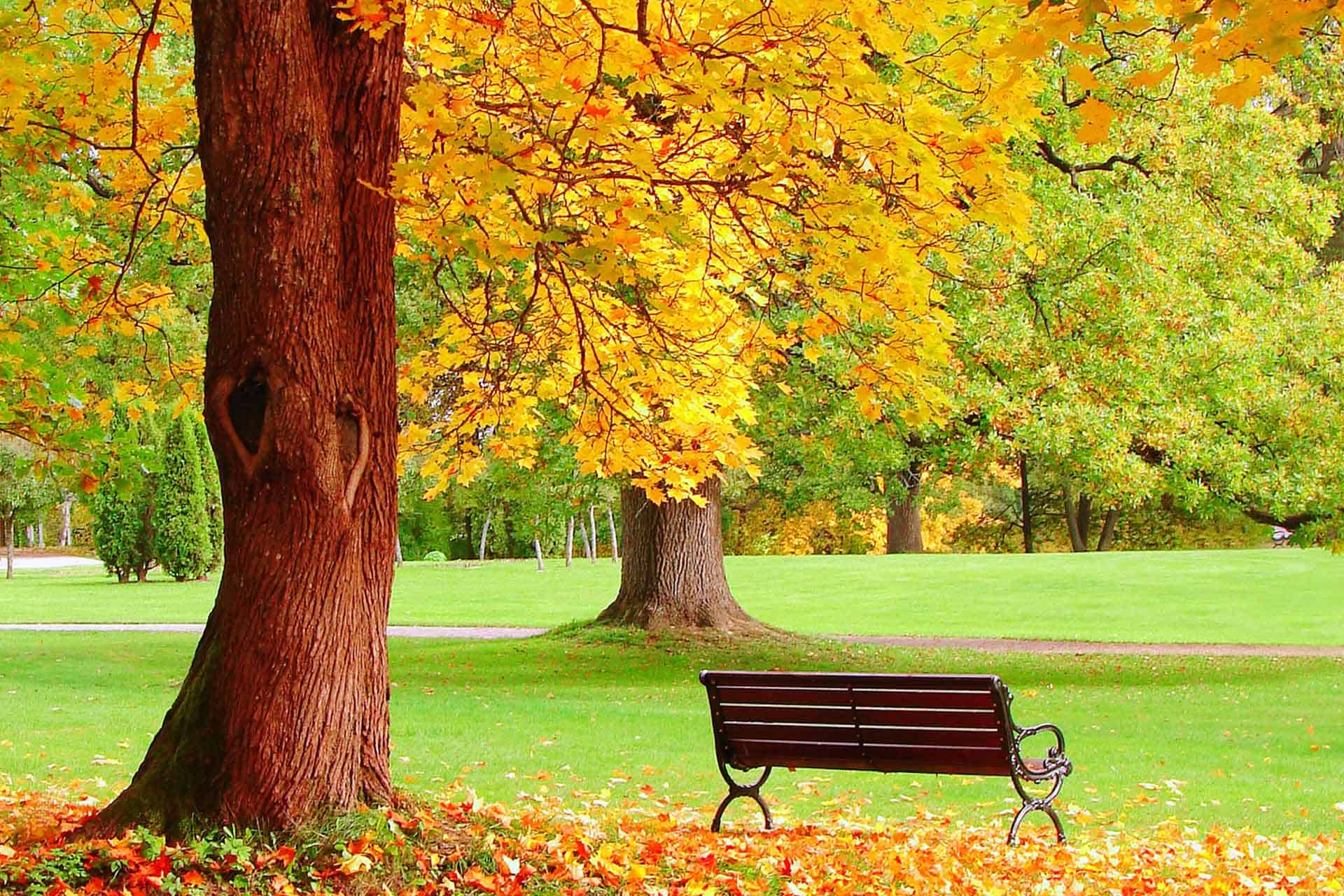
Here is a list of colors that would be good to add to your palette for mixing fall landscape colors. You certainly don’t have to buy all of these!
These are just suggestions if you are making a trip to the art supply store and want to pick up a tube or two. (Who doesn’t love going to the art supply store? 😊)
Red, yellow, and dark colors will give you mixes for a wide variety of fall colors. If you are adding some green to your fall landscape, have a look at my post, How to Mix the Perfect Green Paint, for some tips on mixing greens. Have fun mixing your perfect fall scene!
Burnt Sienna
Cadmium Red Deep
Raw Sienna
Payne’s Grey
Cadmium Red Light
Ultramarine Blue
Cadmium Yellow Light
Burnt Umber
Yellow Ochre
Cadmium Yellow Deep
Cadmium Orange
Transparent Mixing White
Extra Fall Painting Tips

Here are a few tips to help with your fall landscape painting.
1. Make the foreground lighter and cooler to make the autumn foliage really stand out. So make the grass a lighter shade of green or a stream in the foreground a cooler shade of blue.
2. Keep the brightest colors towards the center of your trees. This will give the scene more depth. Don’t overdo it. Let some of the skies peek through to give your trees a light, airy feel.
3. Don’t forget to add a little early snow in the mountains if your painting has them. It will give the whole scene a crisp fall feel. Snow is not pure white. It often has a hint of the color of your sky and darker areas in the services of the mountain.
4. You don’t have to paint every individual leaf and branch. Just giving the impression of foliage will make a beautiful painting. Use an old scruffy brush to dab on hints of color to imitate the leaves.
5. There are some colors you may not have thought of as being in a fall scene. There can be various shades of grey, blue/grey, green/grey or even purple hidden in the shadows. Shadows often take on hues from the colors around them.
6. These color mixes are also great to use if you are doing some fall decorating. All of these colors can be incorporated into paintings of pumpkins, scarecrows, or even a fall welcome sign on your front door.

I hope these tips enable you to add a wider variety of colors to your fall landscapes. Never be afraid to experiment with colors. Have a look at my post on how to mix greens to add the perfect fall greenery to your painting.
You can design your own landscape around these fall color mixes you came up with, or pick your favorite color and do a monochrome painting using only that color in different shades. The most important thing is to have fun. 😊
If you have questions, you can leave them in the comments below. You can also join our free Facebook group, Trembeling Art Creative Corner, where you can ask questions, post your work and get to know some fantastic artists from all genres and skill levels. 😊
Thanks for reading.

Hi Marlyn,
Thank you so much for the tips and knowledge shared on your web.
Thank you. 😊
Hi Marilyn,
I am new at mixing colours with acrylic paints. Your tips in this newsletter have been just what I was looking for. I need to learn more about mixing colours so I can create colours that make the viewer of my pictures feel the essence of Fall. I just tried to get a greyish colour mixed with dark brown and cream but ended up with a dark grey/brown colour. I didn’t notice I had a little bit of black on my brush and it just ruined the colour. Lesson learned! Clean my brush thoroughly if mixing different colours, especially if you’ve been painting with black. Now all I need to do is have a little bit lighter hand with my painting. I’m learning new things every day. Love your site and your art. Keep going with your articles. They are great.
Thank you, this is so helpful!
Hi Marilyn,
Thank you very much for your straight forward explanation on mixing colours. I am attempting to paint a Namib desert scene which has all the colours and shades you discuss. This article is certainly helping me. Thanks again.
Joy.
Hi Marlyn, thanks for the tip. Have a nice day.